Martinelli, Morality, and the Match We Forgot to Talk About
In Arsenal vs Liverpool on Thursday night proved to be a fairly mundane game of football. Considering Arsenal were playing at home, where they have been unbeaten all season in all competitions, I expected a few goals at the very least. Although the reverse fixture ended 1–0, this one felt different. Arsenal were in absolutely blistering form, while Liverpool were beginning to rediscover their title-winning rhythm as well.
Instead, we were given a goalless draw. And somehow, the main talking point wasn’t the football itself, but Gabriel Martinelli’s morality.
Time-wasting injuries
Deep into extra time, Liverpool full-back Conor Bradley challenged for a ball and landed awkwardly, twisting his knee on impact and immediately clutching at it. Anyone who has watched football for more than five minutes knows that when you are protecting a lead, or even just a result, things can get messy.
We have all seen it: goal kicks that take thirty seconds, throw-ins that never seem to happen, players inching their way up the pitch. And of course, the most infamous tactic of all, lying on the ground “injured” in the dying moments of a match.
In Martinelli’s defence, he had no way of knowing the severity of Bradley’s injury. That information isn’t even fully public yet. What we do know is that Bradley was stretchered off and later seen leaving the stadium on crutches.
Earlier in the game, Jeremie Frimpong and Bukayo Saka both spent extended periods on the ground inside the opposition’s box after challenges. Bradley, too, was clearly in pain, but crucially, he was on the touchline. With only minutes remaining, Arsenal at home, chasing the game after being second best for much of the second half, wanted to get play moving again.
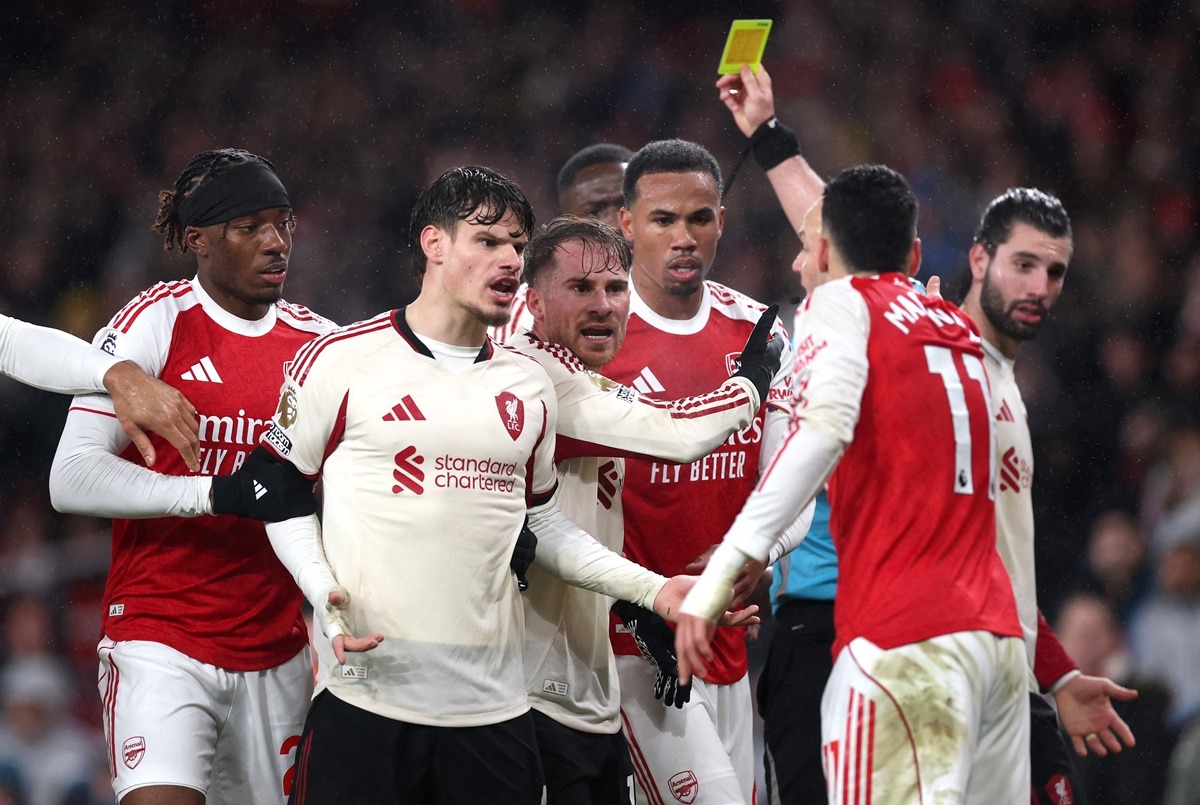
And here is the key point that seems to have been lost entirely: regardless of the injury, Bradley rolled further onto the pitch. Martinelli did what countless players have done before him, attempting to move an opponent off the field in the hope that play could resume. Ironically, it achieved the exact opposite.
Players from both sides quickly became involved, including Konaté, Mac Allister, Van Dijk, and Gabriel Jesus. The result was yellow cards for both Konaté and Martinelli. To present the Arsenal winger as some kind of footballing villain for this moment is, frankly, laughable.
Both Arne Slot and Mikel Arteta addressed the incident in their post-match press conferences and reached the same conclusion: Martinelli could not have known the extent of the injury and was simply trying to get on with the game. Slot summed it up perfectly:
“The problem for him, and it’s a problem in general in football, is that there is so much time-wasting in the final parts of games that sometimes you can be annoyed when you want to score a goal and you feel a player is pretending to be injured. I’m 100 per cent sure if he knew what the injury might be, he wouldn’t do that.”
The atmosphere inside the stadium was restless. Arsenal were being outplayed, and the last thing Martinelli was willing to accept was more seconds being shaved off the clock. That’s all it was. No malice, no intent to injure, nothing more than frustration in a high-pressure moment. Martinelli later confirmed that he had spoken to Bradley personally and apologised for the shove.
Keyboard warrior fans
Opening X after the incident only reinforced how online football discourse has completely lost its head. The name-calling, the threats, the incitement of violence — all directed at Martinelli over what was, again, a completely normal reaction to a player he believed was time-wasting.
But of course, it’s Arsenal, and Arsenal are not afforded the luxury of being normal.
Pundits and fans laughed when Erling Haaland threw the ball at the back of Gabriel Magalhães’ head after a last-minute equaliser. Stoke City supporters booed Aaron Ramsey for years after his leg was broken at their ground. Those are just two examples of the double standards Arsenal repeatedly face.
When Arsenal players react emotionally, it’s a character flaw. When others do it, it’s “passion.” When Arsenal players push boundaries, it’s disgraceful. When rivals do the same, it’s gamesmanship.

This is just one of countless reactions online. The level of outrage directed at Martinelli — and at Arsenal more broadly — over a single, routine interaction between two footballers is utterly ridiculous
In the end, Arsenal vs Liverpool was a tight, tense, and ultimately forgettable goalless draw between two top sides. Yet instead of analyzing the football, the narrative shifted toward outrage and moral judgment over a moment that happens in matches every week. Martinelli misread a situation in the heat of the moment, apologized, and both managers moved on. The rest of the football world, it seems, could not. And that says far more about the reaction than it does about the player.
Post a comment